Stages and grades
The stage of a cancer tells you how big it is and if it has spread. The tests and scans you have to diagnose your cancer will give some information about the stage. But your doctor might not be able to tell you the exact stage until you have surgery.
Doctors use the International Federation of Gynecology and Obstetrics (FIGO) staging system to stage cancers in the:
ovaries
fallopian tubes
peritoneum
There are four stages, numbered 1 to 4.
Stage 2 ovarian cancer means the cancer has grown outside the ovaries or fallopian tubes. It is growing within the . Treatment is surgery and chemotherapy.
Staging can be complicated. Talk to your specialist doctor or nurse if you are unsure. They can help you understand more about your cancer stage.
Read more about the stages and grades of ovarian cancer
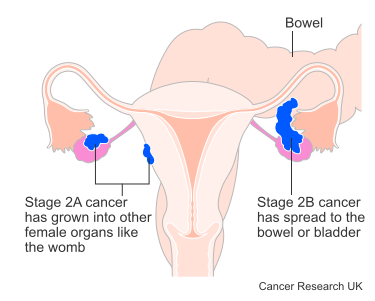
Stage 2 ovarian cancer means the cancer has grown outside the ovaries or fallopian tubes. It is growing within the area between your hip bones (the pelvis). There may also be cancer cells in the abdomen.
It is divided into 2 groups:
Stage 2A means the cancer has grown into other female organs such as the womb
Stage 2B means the cancer has grown into other tissues in the pelvis, such as the bladder or bowel (rectum or sigmoid colon)
The main treatments are surgery and chemotherapy.
Your healthcare team consider several factors when deciding what treatment you need. These include:
where the cancer has spread to
whether the specialist surgeon (gynaecological oncologist) thinks they can remove all the cancer
your general health
Your specialist surgeon (gynaecological oncologist) will remove:
both ovaries
fallopian tubes
your womb (including the cervix)
They will also check where the cancer has spread to in your pelvis and if it is in your lymph nodes. Your gynaecological oncologist will aim to remove as much of the cancer as possible.
This is called cytoreductive surgery. You may also hear it called debulking surgery.
You might have:
chemotherapy after surgery – this is called adjuvant chemotherapy with cytoreductive surgery
chemotherapy before and after surgery – this is called neoadjuvant chemotherapy with interval cytoreductive surgery
Your healthcare team will discuss the best treatment for you. When you have chemotherapy will depend on your individual case.
Read about ovarian cancer treatment
Researchers are always trying to improve the treatment and quality of life for people with ovarian cancer.
Last reviewed: 24 Feb 2025
Next review due: 24 Feb 2028
Ovarian cancer is when abnormal cells in the ovary grow and divide in an uncontrolled way.
Most ovarian cancers start in the cells covering the ovaries and are called epithelial ovarian cancers. Other rare types include germ cell tumours, stromal tumours and sarcomas.
You usually start by seeing your GP. They might refer you to a specialist and organise tests.
The main treatments for ovarian cancer are surgery and chemotherapy. Your treatment depends on several factors including your cancer stage and grade.
There is support available to help you cope with a diagnosis of ovarian cancer, life during treatment and life after cancer.
Ovarian cancer is when abnormal cells in the ovary, fallopian tube or peritoneum begin to grow and divide in an uncontrolled way.

About Cancer generously supported by Dangoor Education since 2010. Learn more about Dangoor Education



Search our clinical trials database for all cancer trials and studies recruiting in the UK.

Connect with other people affected by cancer and share your experiences.

Questions about cancer? Call freephone 0808 800 40 40 from 9 to 5 - Monday to Friday. Alternatively, you can email us.
