Advanced Oesophageal Cancer
Advanced oesophageal cancer means that a cancer that began in the food pipe (gullet or oesophagus) has spread to another part of the body.
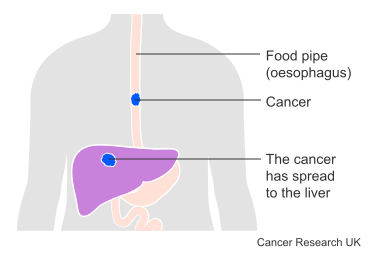
Unfortunately advanced cancer can’t usually be cured. But treatment might control it, help symptoms, and improve your quality of life for some time.
Sometimes cancer is advanced when it is first diagnosed. Or the cancer has come back and spread after treatment for the original cancer.
Cancers that have spread to another part of the body are called:
secondary cancer
metastases
metastatic cancer
Doctors also describe how advanced oesophageal cancer is by using the number staging system. Advanced cancer is stage 4 in the number staging system.
Read more about stage 4 cancer and its treatment
Locally advanced cancer means that the cancer has spread into the tissues around the oesophagus. It hasn’t spread to other organs in the body. This is different to an advanced cancer.
Read more about stages, types and grades
Not all cancers will spread. But if the cancer does spread there are certain parts of the body that it is more likely to go to. The most common areas for oesophageal cancer to spread to include:
liver
lungs
lymph nodes
bone
The most common symptoms are:
feeling very tired
feeling generally unwell
problems swallowing
weight loss
increased acid reflux
Some people have pain but painkillers can usually control this well.
Other symptoms of advanced oesophageal cancer depend on what part of the body the cancer has spread to.
Find out more about the symptoms of advanced cancer
You might have tests to find out exactly where the cancer has spread to.
Read about tests for oesophageal cancer
Treatment aims to control the cancer for a time and reduce symptoms. Radiotherapy or drug treatments may shrink the cancer or stop it growing.
Some treatments can help you to swallow more easily if the cancer is partly blocking your oesophagus.
Find out about treatments for oesophageal cancer
Finding out that you can’t be cured is distressing and can be a shock. It’s common to feel uncertain and anxious. It's normal to not be able to think about anything else.
Lots of information and support is available to you, your family and friends. Some people find it helpful to find out more about their cancer and the treatments they might have. Many people find that knowing more about their situation can make it easier to cope.
Talk to your doctor or specialist nurse to understand:
what your diagnosis means
what is likely to happen
what treatment is available
how treatment can help you
what the side effects of the treatment are
You might feel that you don’t want to know much information straight away. Tell your doctor or nurse. You will always be able to ask for more information when you are ready.
Everyone is different and there is no right way to feel.
Many people want to know what the outlook is and how their cancer will develop. This is different for each person. Your doctor is the best person to discuss this with you because they have all the information about your cancer.
You can also talk to your specialist nurse. Or you can phone the Cancer Research UK nurses on 0808 800 4040, from Monday to Friday, 9am to 5pm.
We have some general information about survival for oesophageal cancer if this is something you want to read about.
Last reviewed: 27 Sept 2023
Next review due: 28 Sept 2026
The most common symptom is feeling tired and unwell. Other symptoms depend on where the cancer is in the body.
You might have a number of tests to help diagnose oesophageal cancer and to find out the stage. This includes a test to look inside your oesophagus (gastroscopy).
You might have surgery, radiotherapy or chemotherapy or a combination of these treatments. This depends on a number of factors including the stage and type of your oesophageal cancer.
Survival depends on many factors including the stage and type of your oesophageal cancer.
There is support available to help you cope during and after oesophageal cancer treatment. This includes diet tips to help you eat well.
Oesophageal cancer starts in the food pipe, also known as your oesophagus or gullet. The oesophagus is the tube that carries food from your mouth to your stomach.

About Cancer generously supported by Dangoor Education since 2010. Learn more about Dangoor Education



Search our clinical trials database for all cancer trials and studies recruiting in the UK.

Meet and chat to other cancer people affected by cancer.

Questions about cancer? Call freephone 0808 800 40 40 from 9 to 5 - Monday to Friday. Alternatively, you can email us.
