Advanced Oesophageal Cancer
Advanced oesophageal cancer means that cancer that began in the food pipe (oesophagus) has spread to another part of the body. The food pipe is also known as the gullet.
Some people have advanced cancer when they are first diagnosed. Other people have cancer that has come back and spread after treatment.
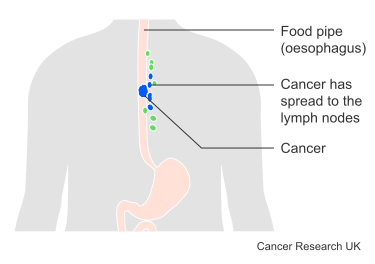
The symptoms of advanced oesophageal cancer depend on what part of the body the cancer has spread to. The most common place for oesophageal cancer to spread is to the liver. It can also spread to the lungs and the lymph nodes.
You may get a number of general symptoms with oesophageal cancer. Some of these happen in the later stages of disease. The most common symptoms include:
difficulty swallowing
unexplained weight loss
increased acid reflux
pain in your throat or behind your breastbone
feeling tired
feeling generally unwell
Read more about the symptoms of oesophageal cancer
The most common places for oesophageal cancer to spread to are the:
liver
lungs
lymph nodes
bone
You might have any of the following symptoms if your cancer has spread to the liver:
discomfort or pain on the right side of your tummy (abdomen)
feeling sick
poor appetite and weight loss
a swollen tummy (called ascites)
yellowing of the skin and whites of the eyes (jaundice)
itchy skin
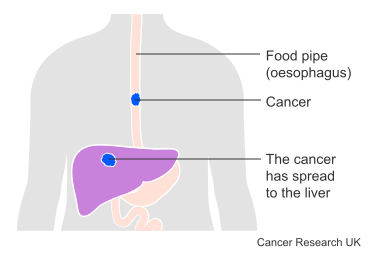
Find out about treatment for cancer that has spread to the liver
You may have any of these symptoms if your cancer has spread into the lung:
a cough that doesn’t go away
breathlessness
ongoing chest infections
coughing up blood
a build up of fluid between the chest wall and the lung lining (a pleural effusion)
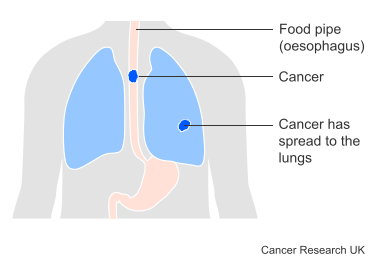
Find out about treatment for cancer that has spread to the lung
Lymph nodes are part of a system of tubes and glands in the body that filters body fluid and fights infection.
The most common symptom if cancer has spread to the lymph nodes is that they feel hard or swollen. Swollen lymph nodes in the neck area can make it hard to swallow.
You might have any of the following symptoms if your cancer has spread to the bones:
pain from breakdown of the bone – the pain is continuous and people often describe it as gnawing
backache, which gets worse despite resting
weaker bones – they can break more easily
raised blood calcium (hypercalcaemia), which can cause dehydration, confusion, sickness, tummy (abdominal) pain and constipation
low levels of blood cells – blood cells are made in the bone marrow and can be crowded out by the cancer cells, causing anaemia, increased risk of infection, bruising and bleeding
Cancer in the spinal bones can cause pressure on the spinal cord. If it isn't treated, it can lead to weakness in your legs, numbness, paralysis and loss of bladder and bowel control (incontinence). This is called spinal cord compression. It is an emergency, so if you have these symptoms contact your 24 hour advice line or healthcare team straight away. If you can't get through, contact your GP or go to your nearest accident and emergency department (A&E).
Find out about cancer that has spread to the bones
Symptoms can usually be well controlled. Your doctor or nurse can tell you about medicines that will help you. They can also tell you about things that you or your friends and family can do.
Swallowing can be difficult and painful if the cancer has fully or partly blocked the oesophagus. This might make it hard to get enough nutrition, and can cause weight loss.
There are many treatments to help shrink the cancer or open the oesophagus. This can help you swallow more easily. These include:
chemotherapy
radiotherapy
an oesophageal stent
laser therapy
heat treatment
dilatation
Read more about treatments for oesophageal cancer
Having a swollen tummy isn't a common symptom of advanced oesophageal cancer.
You might have a swollen tummy (abdomen) if your cancer has spread to the liver. The swelling is due to a build up of fluid called ascites. It can make your clothes feel tighter. Your tummy might feel bloated. You might also find it difficult to sit comfortably or to move around. Ascites can make you feel breathless, especially when lying flat.
Your doctor can drain off the fluid by putting a small, flexible tube into the abdomen. This helps you to feel more comfortable.
Your doctor or specialist nurse can help you to control symptoms. They can:
give you medicines
get equipment that you need
suggest other ways of controlling your symptoms
refer you to a symptom control team (a palliative care team)
There are symptom control teams in most cancer units. They can help you to stay as well as possible for as long as possible. They are also in hospices and many general hospitals.
Most symptom control teams have home care services so they can visit you at home.
Last reviewed: 27 Sept 2023
Next review due: 28 Sept 2026
Advanced oesophageal cancer means your cancer has spread to other parts of your body.
You might have surgery, radiotherapy or chemotherapy or a combination of these treatments. This depends on a number of factors including the stage and type of your oesophageal cancer.
Swallowing can be difficult for some people with cancer in the oeosphagus. There are treatments that can make swallowing easier.
There is support available to help you cope during and after oesophageal cancer treatment. This includes diet tips to help you eat well.
The stage of a cancer tells you how big it is and whether it has spread. It helps your doctor to know which treatment you need.
Oesophageal cancer starts in the food pipe, also known as your oesophagus or gullet. The oesophagus is the tube that carries food from your mouth to your stomach.

About Cancer generously supported by Dangoor Education since 2010. Learn more about Dangoor Education



Search our clinical trials database for all cancer trials and studies recruiting in the UK.

Meet and chat to other cancer people affected by cancer.

Questions about cancer? Call freephone 0808 800 40 40 from 9 to 5 - Monday to Friday. Alternatively, you can email us.
