Smoking, tobacco and cancer
Cigarettes contain tobacco. Tobacco contains or produces many dangerous chemicals. Some of these chemicals occur naturally in tobacco. Others form when processing tobacco into cigarettes. When a cigarette is burnt, it releases thousands more chemicals in tobacco smoke. Many of these chemicals are harmful to people who smoke. They are also harmful to people who breathe in second-hand smoke. We know that at least 70 of these chemicals cause cancer. Roll-up tobacco cigarettes are not safer. They contain the same cancer-causing chemicals as manufactured cigarettes. Using a filter or smoking ‘low-tar’ or ‘light’ cigarettes are also not safer or healthier options. In the UK it is against the law to call tobacco products ‘light’, ‘mild’ or ‘low-tar’. Cigarettes are the most common type of tobacco product used in the UK. But tobacco comes in many different forms. These include cigars, pipes, shisha and smokeless tobacco, such as chewing tobacco or snuff. Smokeless tobacco isn’t burnt, so it doesn’t produce tobacco smoke. Instead, smokeless tobacco can be sucked, chewed or used nasally. People using it can take in cancer-causing chemicals this way. This may be at similar or higher levels than cigarette smoke. Smokeless tobacco can cause cancer and is not a safe alternative to smoking tobacco.
Tar is a sticky-brown substance that collects in the lungs when tobacco smoke is breathed in. It can stain fingers and teeth a yellow-brown colour. Tar contains cancer-causing chemicals. It also increases the risk of lung diseases, such as emphysema and chronic obstructive pulmonary disease (COPD).
Tobacco smoke contains a poisonous gas called carbon monoxide. You can’t smell it, see it or taste it. Carbon monoxide stops the blood from carrying as much oxygen round the body. This means organs don’t get the amount of oxygen they need. The heart must also work harder to supply the body with oxygen. This increases the risk of heart disease and stroke.
All forms of tobacco contain nicotine, which is a very addictive chemical. Most people who smoke don't continue to do so out of choice – it’s because they have a nicotine addiction. Nicotine itself does not cause cancer. But because it is so addictive, nicotine can make it very hard to stop using tobacco. This means people continue to take in cancer-causing chemicals from tobacco smoke. Your body gets used to having nicotine from tobacco. So when you first stop smoking, you may get nicotine withdrawal symptoms like cravings or feeling restless. Nicotine replacement therapy (NRT) and other stop smoking tools are designed to make stopping smoking easier. They provide nicotine in a safer way than tobacco, helping to satisfy cravings without exposing you to the harmful chemicals in tobacco smoke. Find out more about NRT on our how do I stop smoking page.
Tobacco smoke contains thousands of chemicals. These include toxic metals, poisonous gases and chemicals that cause cancer. The chemicals in tobacco smoke mix together when they are inhaled. This can cause greater damage to the body. Some chemicals help other cancer-causing chemicals to damage the cells of the body.
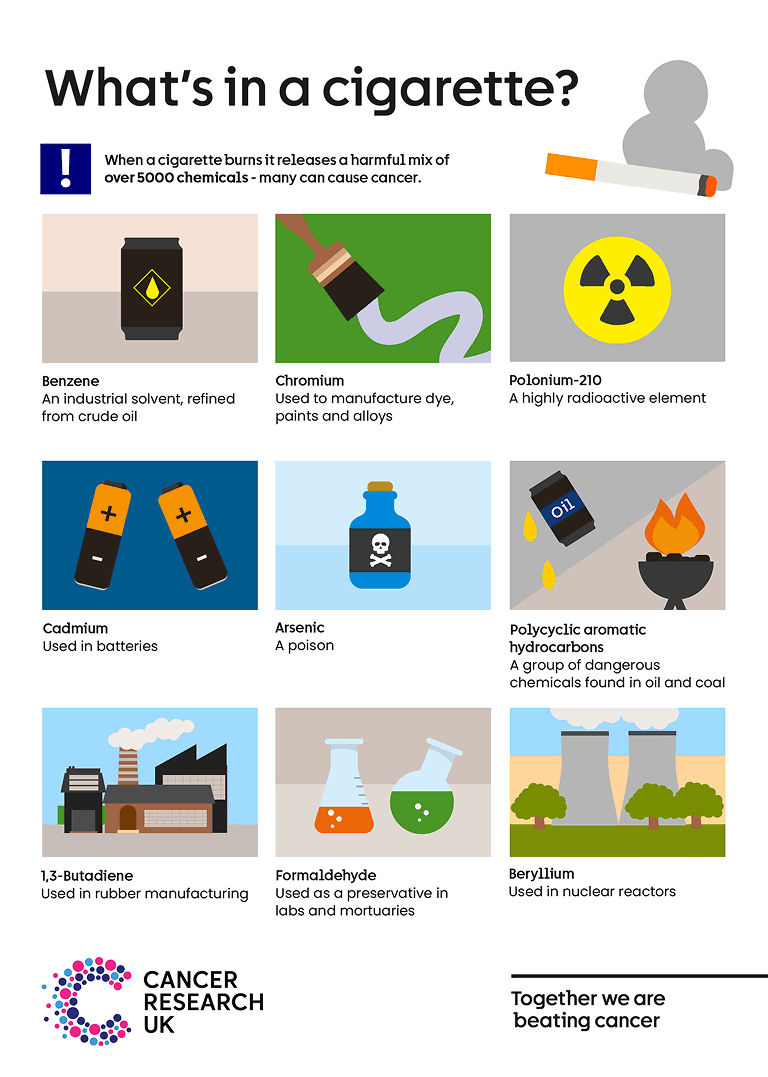
At least 70 of the chemicals found in tobacco smoke cause cancer. You may be surprised to learn where some of the harmful chemicals in cigarettes are also used:
1,3-Butadiene: used in rubber manufacturing
Arsenic: a poison
Benzene: an industrial solvent, made from crude oil
Beryllium: used in nuclear reactors
Cadmium: used in batteries
Chromium: used to manufacture dye, paint and car alloys
Formaldehyde: used in science labs and mortuaries
Polonium-21: a highly radioactive element
Polycyclic aromatic hydrocarbons: a group of dangerous chemicals found in oil and coal, including benzo(a)pyrene
Many of these chemicals are found in everyday products or some workplaces. But these are at very low levels or under strict safety regulations. This means they are much less likely to cause damage. Tobacco smoke is different. It delivers many cancer-causing chemicals directly into the lungs repeatedly over time.
Breathing in tobacco smoke sends harmful chemicals to the lungs and the blood. This carries the chemicals to all parts of your body. Here are some of the ways that harmful chemicals in tobacco smoke damage the body:
DNA controls how our cells grow and behave. DNA damage can cause cells to behave in ways they’re not supposed to, which can lead to cancer. Chemicals in tobacco smoke damage DNA. This includes the parts of DNA that protect our cells from becoming cancerous. There are also chemicals in tobacco smoke that stop our cells from repairing damaged DNA. This makes it even more likely that cancer will develop.
Chemicals in tobacco smoke damage the cilia in our airways. Cilia are tiny hair-like structures on the surfaces of some cells. They help to keep our airways clear from dirt and infections. This means people who smoke are less able to clear toxic chemicals. The chemicals build up and cause damage. A cough is often developed as the lungs try to clear themselves.
Our immune system aims to protect us against illness and infection. But chemicals in tobacco smoke may affect how well our immune system works. Chemicals in tobacco smoke may also cause inflammation, which can lead to DNA damage. Find out more about how smoking causes at least 16 types of cancer.
If you smoke, the best thing you can do for your health is to stop completely. Stopping smoking reduces your risk of at least 16 different cancers. But there are many benefits to stopping smoking, from improving your physical and mental health to saving money. Read more about the benefits of stopping smoking.
We know that stopping smoking can be hard, but you don’t have to do it alone. There are a range of tools and support services to help you succeed.
Find support and advice on how to stop smokingLast reviewed: 24 Jun 2026
Next review due: 24 Jun 2029