Targeted cancer drugs and immunotherapy
An antibody is a Y shaped protein found in your blood. They are also known as immunoglobulins. Antibodies are made by the . They are released in response to a foreign substance (pathogen) entering the body such as bacteria or viruses. Antibodies identify particular proteins (called antigens) on the surface of these substances and bind to them. This triggers the immune system to attack and destroy the foreign substances.

Read more about the immune system including antibodies
Scientists can make monoclonal antibodies in the laboratory to help treat certain conditions including some types of cancer. They are similar to the body’s natural antibodies. Monoclonal means all one type. So each mAb treatment is a lot of copies of one type of antibody.
Monoclonal antibody treatments are a complicated group of cancer drugs that work in different ways. This includes:
blocking signals telling the cancer cells to divide and grow
carrying cancer drugs or to cancer cells
blocking signals that help cancer cells develop a blood supply
blocking the proteins that let cancer cells hide from the immune system
bringing together cancer and immune cells to help the immune system kill cancer cells
Cancer cells often have large numbers of proteins on their surface called growth factor receptors. These send signals to help the cells grow and survive.
These types of mAbs stop growth factor receptors from working properly by blocking the receptor. This means the cancer cell no longer receives the signals it needs to stay alive.
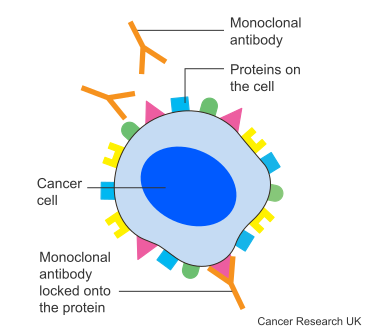
These types of mAbs are usually classed as a targeted cancer drug because they have a specific target to attach to. But many also activate the immune system to destroy the cancer cells.
Pertuzumab is an example of this type of mAb.
Below is a video showing how mAbs can block signals to cancer cells.
Some mAbs have cancer drugs or radioactive substances attached to them.
The mAb finds the cancer cells and delivers the drug or radioactive substance directly to them. These are called conjugated mAbs. They are often classed as a type of targeted cancer drug.
An example of this type of mAb is trastuzumab emtansine.
The following video shows how mAbs work when they carry cancer drugs or radioactive substances to cancer cells.
Cancer cells need a blood supply to fuel their growth. Some cancer cells make a protein called vascular endothelial growth factor (VEGF). The VEGF protein attaches to receptors on cells that line the walls of blood vessels within the cancer. This triggers the blood vessels to grow so the cancer can then grow.
Some mAbs block VEGF from attaching to the receptors on the cells that line the blood vessels. These mAbs are called anti angiogenic drugs and are often classed as a type of targeted treatment. Bevacizumab is a type of mAb that works in this way.
Read about anti angiogenic drugs
Some mAbs are classed as a type of immunotherapy. They help our body’s immune system recognise and destroy cancer cells. They can do this in different ways. Some mAbs can mark cancer cells so the immune system can find them more easily. Rituximab is an example of a mAb that works in this way. It attaches to a protein called CD20 which is on some leukaemia and lymphoma cells.
Below is a video showing how mAbs helps your immune system find and kill cancer cells.
Other mAbs can block the proteins that let cancer cells hide from the immune system. These mAbs are called immune checkpoint inhibitors.
Read more about checkpoint inhibitors
A newer type of mAb can bring immune cells called and cancer cells close together. This makes it easier for the T cells to destroy cancer cells. This is a type of immunotherapy.
This type of mAb is called a T cell engager and it can attach to more than one target. One part of the antibody attaches to a protein on T cells, which are part of the immune system. And the other part of the antibody attaches to a protein on the cancer cells. This brings the two different cells together so that the immune system can attack the cancer cells.

As these antibodies attach to 2 targets they are called bispecific T cell engagers (BiTEs). Examples of these include blinatumomab and teclistamab.
Researchers are now looking at developing new antibodies that can bind with 3 targets. These targets may be on the same cell or different cells. These antibodies are called trispecific T cell engagers (TriTEs).
You usually have mAb treatment through a drip (infusion) into a vein. There are a few mAbs you have as an injection under the skin (subcutaneous injection).
How often you have treatment and how many treatments you need will depend on:
which mAb you have
the type of cancer you have
Before you have some types of mAbs you might need to have tests on your cancer cells to find out whether the treatment is likely to work. These tests look for changes in certain proteins or .
To test your cancer cells, your doctor needs a sample (biopsy) of the cancer. They might be able to test some tissue from a biopsy or operation you have already had. Or they might use a blood sample.
Find out more about having a biopsy
All treatments have side effects. These can vary from person to person. The side effects can also depend on the type of mAb you have and what other treatments you’re having. Some side effects can be serious. Your doctor or nurse will talk to you about the side effects and what to look out for.
Your nurse may give you a treatment alert card to carry with you. This is to show to other healthcare professionals so they are aware what treatment you are having. For example if you become unwell and go to accident and emergency (A&E). The card will help the medical team know how best to treat you. Some side effects can be similar to symptoms caused by other conditions, but they are treated very differently.
A common side effect of some mAbs is an allergic reaction. This reaction is most likely to happen when you first have the treatment. So you may have some mAbs as a drip over a few hours the first time you have treatment. If there isn’t a reaction then the next time you have the drip over a shorter time.
If the mAb is likely to cause a reaction, you usually have paracetamol, a and an drug beforehand. This can help to prevent a reaction.
An allergic reaction can include these symptoms:
breathlessness or difficulty breathing
fever and chills
an itchy rash
flushes and faintness
You may not have all these symptoms. Your nurse monitors you closely and treats any symptoms if they happen.
Other general side effects of mAbs include:
skin changes such as red and sore skin or an itchy rash
diarrhoea
tiredness
flu-like symptoms such as chills, fever and dizziness
feeling or being sick
headaches
Contact your hospital advice line if you have these symptoms, particularly if you have diarrhoea, a rash or flu-like symptoms. They can give you treatment if needed.
Some mAbs have specific side effects which can sometimes be serious.
For example, some mAbs can cause heart problems or increase your risk of bleeding. Your team will tell you about this before your start treatment.
For more information about the side effects of you treatment, go to the individual drug pages.
Last reviewed: 26 Feb 2025
Next review due: 26 Feb 2028
Targeted cancer drugs work by ‘targeting’ the differences that help a cancer cell to survive and grow. There are many different types of targeted drugs.
Immunotherapy uses our immune system to fight cancer. It works by helping the immune system recognise and attack cancer cells.
Treatments can include surgery, radiotherapy and drug treatments (such as chemotherapy, hormone therapy or targeted cancer drugs). Find out about treatments and how to cope with side effects.
There are many cancer drugs and cancer drug combinations. Search for the one you are looking for to understand more about how it works, how you have it, the side effects and other important information.
Targeted cancer drugs work by ‘targeting’ those differences that help a cancer cell to survive and grow. Immunotherapy uses our immune system to fight cancer. Find out more about the different types of treatment.