Radiotherapy to relieve symptoms
Fungating tumours are sometimes called fungating wounds or ulcerating cancers. Fungating tumours happen when cancers break through the skin surface. They are also known as ulcerating cancers, malignant wounds or cancer wounds. Radiotherapy can shrink the cancer and help dry up the wound.
Cancer wounds can also develop from skin cancers such as melanoma.
They can be upsetting to cope with and they might be painful, bleed or produce liquid. They can also smell unpleasant.
You might have radiotherapy treatment for a fungating tumour. Radiotherapy can help to shrink the cancer, dry it up and heal the wound to control pain and bleeding. It won't cure your cancer but can keep it under control.
Your doctor might recommend that you have antibiotics as well as the radiotherapy. Antibiotics can control infection and reduce any unpleasant smell from the wound.
Before you have treatment you have a specialised CT planning scan. The treatment team use this to plan exactly where to give the radiotherapy. You might also need to have a plastic mould made to keep you completely still during the treatment.
Your doctor tells you how many radiotherapy appointments you'll have. This can vary from person to person but might range from 5 to 10 treatments over the course of 2 weeks. Each treatment is called a fraction. You usually go to the radiotherapy department once a day from Monday to Friday.
The radiotherapy machine is called a linear accelerator. To have the treatment you lie on the radiotherapy couch. The therapeutic radiographers help you to get into the right position.
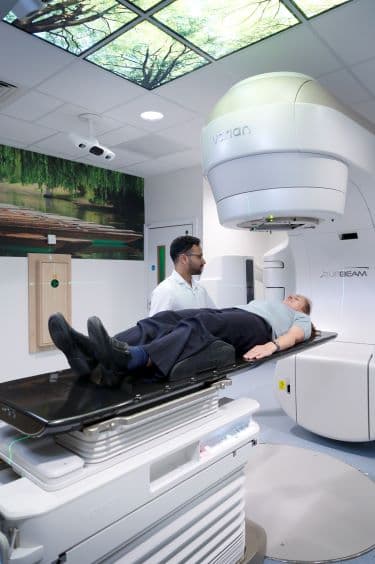
They then leave the room. This is so they are not exposed to radiation. You are alone for a few minutes while you have the treatment. But they can see and hear you the whole time.
You can't feel the radiotherapy. It doesn’t hurt but you might find it uncomfortable to lie in position during the treatment. The radiotherapy couch can be quite hard. You can ask your doctor if you can take a painkiller half an hour beforehand if you think it might help.
Radiotherapy works well for many fungating (ulcerating) or bleeding cancers. You should notice that your symptoms start to improve within 1 or 2 weeks. But a large or deep ulcer will take some time to heal. The treatment might heal the ulcer completely or it may shrink it and make it easier to manage.
Read more about ulcerating cancers and treatment
The ulcerated area may seem worse when you start radiotherapy. This is because the cancer cells are dying off and making the wound seem larger or deeper. But then it should start to improve and heal.
Other side effects are usually mild. You may feel tired. Or have a mild skin reaction to the radiotherapy, making the surrounding skin red, or dry and flaky.
Last reviewed: 29 Nov 2023
Next review due: 29 Nov 2026
External radiotherapy uses radiotherapy machines to aim radiation beams at a cancer. This destroys the cancer cells. There are different types of external radiotherapy.
Fungating tumours are also sometimes called fungating wounds, ulcerating cancers, malignant wounds or ulcerating cancer wounds.
Having a fungating (ulcerating) tumour can affect you emotionally as well as physically. It can be hard to come to terms with the change in your body and how you see yourself.
Radiotherapy can cause different side effects depending on which part of the body is being treated. Find out what these side effects are and how they affect you during and after treatment.
Find out about cancer treatment with radiotherapy, including external radiotherapy, internal radiotherapy, side effects, radiotherapy for symptoms and follow up after treatment.

About Cancer generously supported by Dangoor Education since 2010. Learn more about Dangoor Education



Search our clinical trials database for all cancer trials and studies recruiting in the UK.

Connect with other people affected by cancer and share your experiences.

Questions about cancer? Call freephone 0808 800 40 40 from 9 to 5 - Monday to Friday. Alternatively, you can email us.
