Getting diagnosed with stomach cancer
Most people start by seeing their GP if they have symptoms that could be due to cancer. Some people are also diagnosed with stomach cancer after they become unwell and go to A&E.
Find out about the symptoms of stomach cancer
Your GP asks about your symptoms including when they started and how often you have them. If you have had a telephone appointment, your GP might arrange for you to come in and see them.
The tests your GP might do include:
a physical examination
blood tests
After the examination, your GP may ask you to have a gastroscopy. You usually have this test at your local hospital. Or your GP may refer you straight to see a specialist.
This examination involves your doctor feeling your tummy (abdomen). They feel for any areas that are swollen or might not feel normal. And if you have any pain, they will feel those areas.
They also listen to your chest and abdomen to find out if it sounds normal. For example, they can listen for signs of fluid collecting, or your working.
Blood tests can check your general health including:
how well your liver and kidneys are working
check the number of blood cells such as red blood cells
Find out about having a blood test
A gastroscopy is a test that looks at the inside of your:
food pipe (oesophagus)
stomach
the first part of the small bowel (intestine)
It is also called endoscopy or oesophago gastric duodenoscopy (OGD).
Your doctor uses a long flexible tube with a small camera and light at the end. They can check the stomach for growths or abnormal looking areas. Doctors can also take samples of tissue (biopsies) of any abnormal looking areas. They send the samples to the laboratory to be checked for cancer cells.
Usually you're awake when you have this test, but you can choose to have a medicine to help you relax. This makes you drowsy (sedation).
The doctor will also spray local anaesthetic in the back of your throat to make it easier to swallow the endoscope.
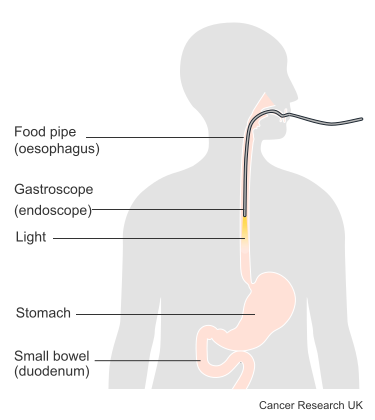
Read more about having a gastroscopy
Depending on your symptoms and the results of your tests, your GP might refer you to a specialist. You are usually referred to an upper gastrointestinal (GI) clinic where you see a GI specialist doctor.
Your specialist usually does more tests. These include:
CT scan
endoscopic ultrasound (EUS)
laparoscopy
PET-CT scan
CT (or CAT) stands for computed (axial) tomography. It is a test that uses x-rays and a computer to create detailed pictures of the inside of your body.
You may have a CT scan of your chest, tummy and pelvis. This is to find out the position and size of the cancer and where it is in relation to other organs. It can also check whether it has spread to other parts of the body.
Find out more about having a CT scan
This test combines an ultrasound and endoscopy to look at your food pipe and stomach.
Your doctor uses a long flexible tube called an endoscope with a tiny camera and light. The endoscope also has an ultrasound probe. The probe uses high frequency sound waves to create a picture of the inside of your body.
This test can help find out the size of the cancer and whether it has spread.
A PET-CT scan combines a CT scan and a PET scan. This type of scan can give detailed information about your cancer. You might have a PET-CT scan to find out exactly where the cancer is and whether it has spread.
Find out more about having a PET-CT scan
Laparoscopy is a small operation to look inside your tummy. It is also called keyhole surgery. Your surgeon can look for any signs of cancer and whether it has spread. You might have it to find out if stomach cancer has spread and help plan your treatment.
You have this operation under .
Read more about having a laparoscopy
After a biopsy or surgery, your doctor sends samples of cancer cells to the laboratory. A doctor called a pathologist does various tests on the cells. The tests help to diagnose stomach cancer.
Tests on the cancer cells can also help doctors decide on the best treatment for you. For example, you may be able to have treatment with a drug called trastuzumab if you have large amounts of HER2 proteins on the surface of cancer cells. These are called HER2 positive stomach cancers.
Other drugs only work for people who have:
large amounts of a protein called PD-L1
gene changes called high microsatellite instability (MSI) and mismatch repair deficiency (MMRd)
Some of these tests are only for people who have stomach cancer that has spread to other parts of the body. This is advanced (metastatic) stomach cancer. Your doctor can tell you more about these tests.
The tests you have help your doctor find out if you have stomach cancer and how far it has grown. This is the stage of the cancer.
Read about the stages of stomach cancer
This is important because doctors recommend your treatment according to the stage of the cancer.
Find out about the treatment options for stomach cancer
Coping with a diagnosis of stomach cancer can be difficult. There is help and support available to you and your family.
Last reviewed: 25 Feb 2025
Next review due: 25 Feb 2028
Stomach cancer is when abnormal cells in the stomach start to grow and divide in an uncontrolled way. The stomach is part of the digestive system.
Symptoms of stomach cancer include difficulty swallowing, weight loss and indigestion (dyspepsia).
Your treatment depends on whereabouts your cancer is in the stomach. How big it is, whether it has spread anywhere else in your body and your general health.
Advanced stomach cancer means that a cancer that began in the stomach has spread to at least one other part of the body, such as the liver or lungs.
There is support available to help you cope during and after stomach cancer treatment. This includes diet tips to help you eat well.
Stomach cancer is cancer that starts anywhere inside the stomach or the stomach wall. It’s also called gastric cancer.

About Cancer generously supported by Dangoor Education since 2010. Learn more about Dangoor Education



Search our clinical trials database for all cancer trials and studies recruiting in the UK.

Connect with other people affected by cancer and share your experiences.

Questions about cancer? Call freephone 0808 800 40 40 from 9 to 5 - Monday to Friday. Alternatively, you can email us.
