Other conditions
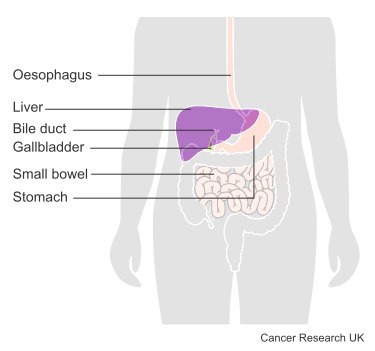
Your doctor can feel an enlarged gallbladder when they examine you. The gallbladder is a small pouch by the liver. It fills with bile, a yellowish liquid which helps to digest fats.
Jaundice is a yellowing of the skin and whites of the eyes.
The gallbladder releases bile into the intestine after a meal. But if the flow of bile from the gallbladder is blocked, the body tissues absorb the yellowish pigments in bile instead. This causes jaundice.
The symptoms of jaundice and an enlarged gallbladder usually mean there is a blockage in the digestive system just below where the joins the intestine. Most blockages affecting the gallbladder are caused by gallstones.
The fact that there is no pain in Courvoisier syndrome suggests that gallstones probably aren’t the cause of the jaundice. The gallbladders of people who have gallstones may often shrink. This might be due to repeated infections, so the doctor is less likely to feel them.
The types of cancer most likely to block the bile duct are pancreatic cancer and bile duct cancer.
Courvoisier syndrome can also be caused by other conditions, such as long term inflammation of the pancreas.
Find out more about these cancer types in our A - Z list
Your doctor might suspect that the blockage is caused by cancer and will want to do some tests. For example, blood tests. They will also ask questions about other symptoms you may have and how long you’ve had them, and examine you.
Other tests and scans you might have include:
an ultrasound scan
a CT scan
a type of MRI scan called MRCP- which stands for magnetic resonance cholangio pancreatography
Your doctor will explain what tests you need and why you need them.
We have information on the different tests and scans you might have to find out if you have cancer.
Find a test or scan on our A-Z list
Treatment depends on the cause of the blockage.
If cancer is the cause and can be removed with surgery, it can sometimes be cured and can allow the bile to flow again.
can not be removed. But your doctor might suggest putting in a small tube called a stent to allow the bile to drain away. This can relieve the jaundice.
They might also suggest treatment with chemotherapy or radiotherapy. This is to try to shrink the cancer for a while. This treatment doesn't work for everyone, but new treatments are always being tried.
Read more about chemotherapy and radiotherapy
Coping with cancer can be difficult. There is help and support available. We have information about coping with a cancer diagnosis. And information for your family and friends.
Last reviewed: 09 Oct 2023
Next review due: 09 Oct 2026
Bile duct cancer is also called cholangiocarcinoma. It is a rare type of cancer that develops in the small tubes that connect the liver and gallbladder to the small bowel.
Pancreatic cancer is cancer that starts in the pancreas. The pancreas is a gland that produces digestive juices and hormones. Find out about symptoms, tests you might have to diagnose it, treatment and about living with it.
Gallbladder cancer is a cancer that begins in the gallbladder, which is part of the biliary system. It is quite rare in the UK and more common in women than in men.
Coping with cancer can be difficult. There is help and support available. Find out about the emotional, physical and practical effects of cancer and how to manage them.

About Cancer generously supported by Dangoor Education since 2010. Learn more about Dangoor Education



Search our clinical trials database for all cancer trials and studies recruiting in the UK.

Meet and chat to other cancer people affected by cancer.

Questions about cancer? Call freephone 0808 800 40 40 from 9 to 5 - Monday to Friday. Alternatively, you can email us.
