Liver cancer
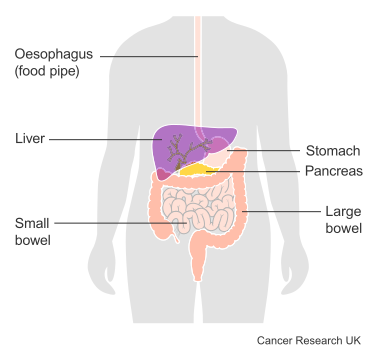
The liver is the second largest organ in the body after your skin. It is just below your right lung and is protected by the lower ribs on the right side of your body.
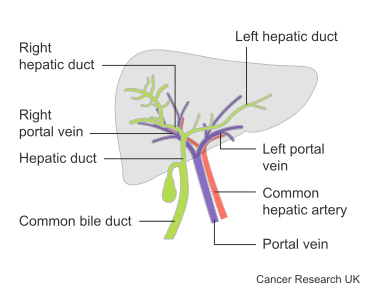
Two blood vessels supply your liver with blood. They are the hepatic artery and the hepatic portal vein.
Just before it reaches the liver, the blood in the portal vein comes through the gut (digestive system). As it flows through, it picks up the nutrients that the digestive system breaks down from the food that you eat. These include carbohydrates, proteins, fats and vitamins. The blood then carries these nutrients to the liver.
Your liver uses chemicals to convert foods that you eat into energy. It does this with food containing carbohydrates and fat.
Your liver makes bile. This is a substance that helps the digestion and absorption of food. Bile is stored in a small sack below the liver called the gallbladder. The bile passes into the bowel through the bile duct. This is a tube that goes from the liver to the first part of the small bowel (duodenum).
Your liver makes proteins including albumin. Albumin is a protein found in blood. It helps to keep the right balance of fluid between the body's tissues and the bloodstream.
Your liver makes substances that help your blood to clot. These substances help to control bleeding when you cut yourself.
Your body makes substances that are essential for healthy bones and tissues. It also makes cholesterol, which is an important part of cell walls.
Your liver breaks down harmful substances so that the body can get rid of them in your pee (urine) or poo (faeces). This includes alcohol, many drugs, and waste products from normal body processes. If the liver is not working properly, harmful substances can build up and cause problems.
The liver is made up of different types of cells. The type of liver cancer you have depends on where in the liver it starts and the type of cell it starts in.
Knowing which type of liver cancer you have helps your doctors decide what treatment you need. The different types of primary liver cancer are:
hepatocellular carcinoma (HCC), this is the most common type of liver cancer
fibrolamellar cancer, this is a rare type of HCC
bile duct cancer - this is also called cholangiocarcinoma, this can start in the bile ducts within or outside the liver
angiosarcoma (or haemangiosarcoma), which starts in the blood vessels of the liver and is extremely rare
hepatoblastoma, is a rare childhood cancer
Most of the information in this section of the website is about hepatocellular carcinoma (HCC).
Around 7,000 people are diagnosed with cancer that starts in the liver each year in the UK. That’s 19 new cases every day.
It is more common in men than in women. The risk of developing liver cancer gets higher as we get older.
Find out more about the risks and causes of primary liver cancer
Last reviewed: 13 Mar 2025
Next review due: 13 Mar 2028
Symptoms of liver cancer can include weight loss, jaundice, feeling sick, and a swollen or painful tummy (abdomen).
Liver cancer is uncommon in the UK. Find out about factors that can increase your risk of developing it.
You usually start by seeing your GP. They might refer you for tests or to a specialist if you have symptoms that could be caused by liver cancer.
There are different types of cancer that start in the liver. The most common type is hepatocellular carcinoma (HCC).
Your treatment for liver cancer depends on the stage of your cancer and how well your liver is working. The most common treatments are surgery, heat treatment, drug treatments and radiotherapy.
Primary liver cancer is cancer that started in the liver. This section is mainly about the most common type of liver cancer, hepatocellular carcinoma (HCC).

About Cancer generously supported by Dangoor Education since 2010. Learn more about Dangoor Education



Search our clinical trials database for all cancer trials and studies recruiting in the UK.

Connect with other people affected by cancer and share your experiences.

Questions about cancer? Call freephone 0808 800 40 40 from 9 to 5 - Monday to Friday. Alternatively, you can email us.
