Neuroblastoma
Neuroblastoma is a rare cancer that affects children. It mostly affects children under the age of 5 years. Around 100 children between the ages of 0 and 14 years are diagnosed with neuroblastoma each year in the UK. Very rarely it can develop in older children, teenagers and adults.
Neuroblastoma is a cancer that starts in a type of nerve cell called a neuroblast.
‘neuro’ means nerve
‘blast’ means cells in early development
‘oma’ means a group of cells, or a tumour
Neuroblastoma often starts in the tummy (abdomen), commonly in:
the
the nerve tissue at the back of the abdomen
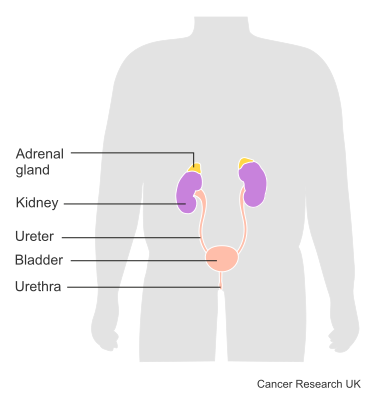
Like other cancers it can spread to other parts of the body.
The most common places are the bones, liver, skin and . It spreads through the blood and .
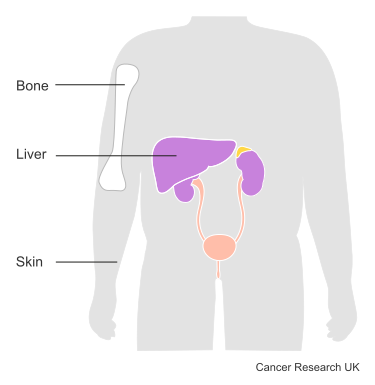
This happens in about half (about 50%) of children with neuroblastoma. In the other half (about 50%) neuroblastoma is a single tumour in one place in the body.
We don’t know exactly what causes neuroblastoma. In some cases, there is a family history. But these cases are very rare.
Parents of children with cancer can sometimes worry about what caused their child's cancer. And some worry about whether it could have been something they did, or didn’t do. We don’t know what causes, or how to prevent, most childhood cancers. This includes neuroblastoma. No one should feel to blame.
Read more about the possible causes and risks of cancer in children
The most common symptom of neuroblastoma is a lump in the tummy. This could make the child’s tummy swell, causing discomfort or pain.
There are other less common symptoms of neuroblastoma.
Find out more about the possible symptoms
Doctors group neuroblastoma by risk. This looks at whether there is a low, medium or high risk of the cancer coming back after treatment.
Doctors usually decide on a risk group depending on a number of things:
how old the child is
what the neuroblastoma cells look like under a microscope
the stage of the neuroblastoma
changes in inside the neuroblastoma cells
The stage of a cancer tells you how big it is and whether it has spread. Knowing the stage can help your doctor decide on the right treatment. And it can help to predict the outcome (prognosis) after treatment.
Find out more about staging and the possible gene changes inside neuroblastoma cells
The main treatments for neuroblastoma are:
surgery
chemotherapy
radiotherapy
immunotherapy
Last reviewed: 19 Mar 2025
Next review due: 19 Mar 2028
Find out about what to expect when your child is first diagnosed.
The most common symptom of neuroblastoma is a lump in the tummy (abdomen). Other symptoms depend on where the neuroblastoma starts in the body. Find out about the other possible symptoms of neuroblastoma.
Your child will need a number of tests if their doctor suspects they have neuroblastoma. Find out what tests they might have.
Surgery, chemotherapy, immunotherapy and radiotherapy are the main treatments for neuroblastoma. Find out how doctors work out your child's treatment.
Researchers are looking at improving the diagnosis and treatment of neuroblastoma. Find out about the research that is happening.
Survival depends on many different factors. It depends on your child’s cancer type and any changes inside the cancer cells. It also depends on treatment and generally how well they are.

About Cancer generously supported by Dangoor Education since 2010. Learn more about Dangoor Education



Search our clinical trials database for all cancer trials and studies recruiting in the UK.

Meet and chat to other cancer people affected by cancer.

Questions about cancer? Call freephone 0808 800 40 40 from 9 to 5 - Monday to Friday. Alternatively, you can email us.
