Causes of cancer and reducing your risk
The older we are, the more likely we are to develop cancer. Many people are surprised by this, which could be because there are often stories in the media about younger people with cancer.
Anyone can get cancer, but cancer at a young age is rare. Most cases of cancer are in people aged 50 and over.
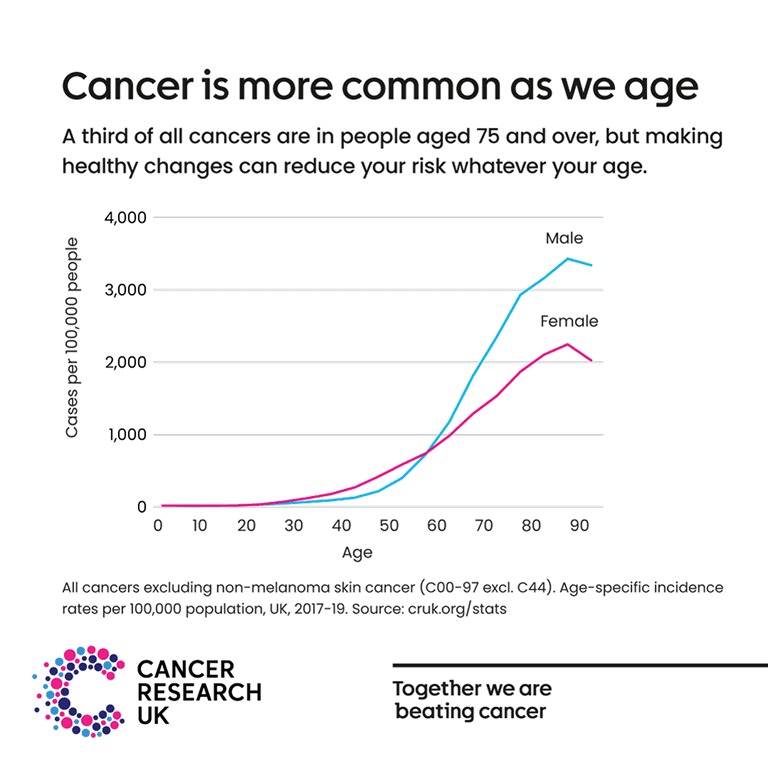
The graph below shows that cancer cases rise with age, rising more steeply from around age 50-60. A third of all UK cancer cases are in people aged 75 and over.
Cancer risk increases as we age, but that doesn’t mean you will definitely get cancer as you get older. There are things you can do to reduce your risk of cancer, whatever age you are.
Around 4 in 10 cancer cases in the UK could be prevented by making healthy changes. Things like stopping smoking, keeping a healthy weight, staying safe in the sun, drinking less alcohol, and eating a healthy balanced diet can all help reduce your risk of cancer.
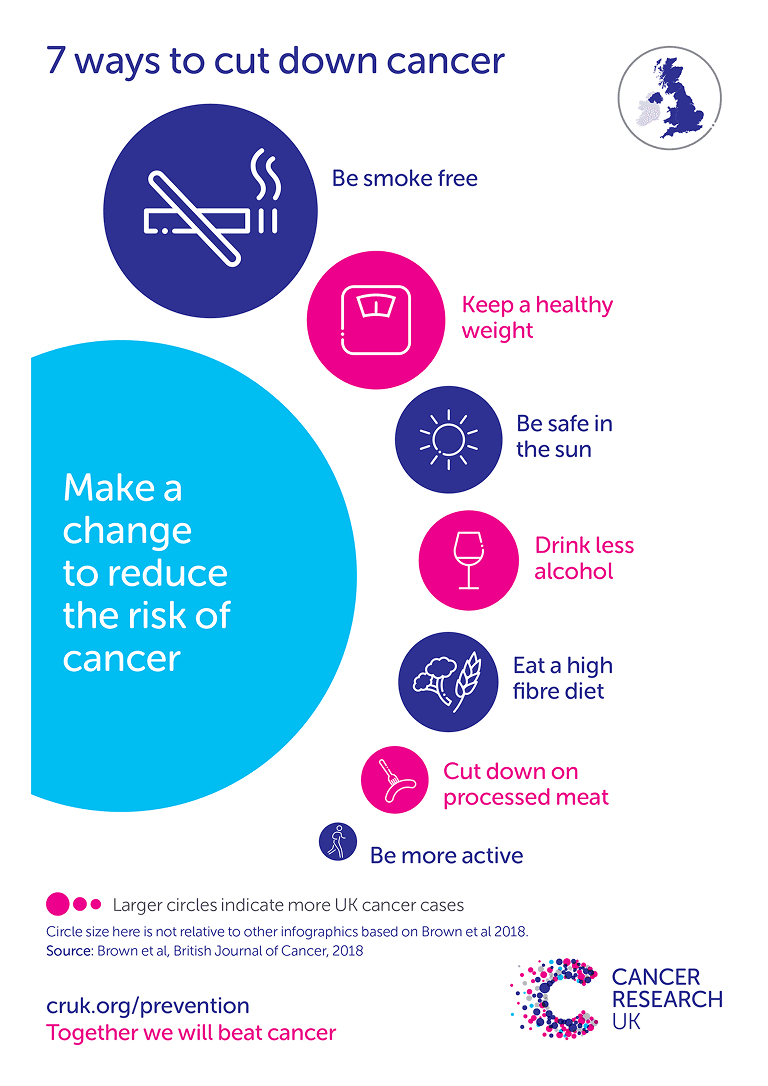
You can make these healthy changes at any age.
Find out more about how to reduce your risk of cancer
Over time, the cells in our body become damaged. Cancer develops when damage in the same cell builds up.
Some of this damage happens by chance during normal cell activity. But cell damage is also caused by things outside the body, such as the chemicals in cigarette smoke, alcohol and too much UV radiation from the sun.
Often our body repairs the damage, or damaged cells self-destruct. But sometimes the damage in a cell builds up, and the cell starts to behave differently. This is when it can grow out of control and develop into a cancer.
As we age, there’s more time for damage in our cells to build up, making cancer more likely.
Further information on what cancer is and how it starts.
Cancer survival is improving, and has doubled in the last 50 years in the UK. Spotting cancer at an early stage means treatment is more likely to be successful.
When it comes to your body, you know it best. If something doesn’t look or feel quite right, tell your doctor. Don’t assume it’s due to ‘just getting older’, or part of another health condition you may have. Your doctor will want to hear from you, you won’t be wasting their time.
Advice on making an appointment and talking to your doctor.
More about the signs and symptoms of cancer.
Cancer screening looks for early signs of cancer in people without symptoms.
The link between age and cancer risk is partly why cancer screening programmes in the UK are offered to certain age groups. Screening is offered at ages when the benefits are biggest and the harms are smallest.
Find out more about cancer screening.
Remember, cancer screening is for people with no symptoms. If you’ve noticed something that is unusual for you, don’t wait for cancer screening – tell your doctor.
Last reviewed: 21 Nov 2023
Next review due: 21 Nov 2026