About Cancer
If you are looking for information about cancer of the neck of the womb (cervix), this is not the right section for you. We have a separate section about cervical cancer.
Read more about cervical cancer
Womb cancer starts in the cells of the womb (uterus). Most womb cancers start in the lining (endometrium) of the womb. They are also called uterine or endometrial cancers.
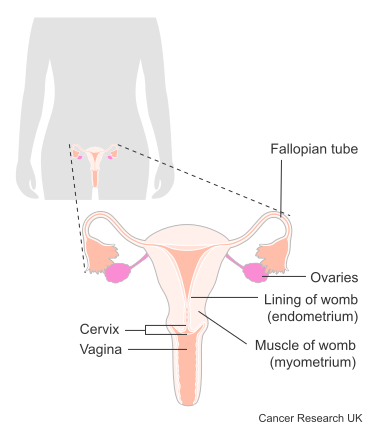
The womb is part of the female reproductive system. It is a pear shaped muscular organ that holds and protects a growing baby during pregnancy. It is hollow, like a bag. The reproductive system is made up of the:
vulva
vagina
womb (uterus)
neck of the womb (the cervix)
fallopian tubes
ovaries
This video shows more detail about the female reproductive system. It lasts for 1 minute and 50 seconds.
Most womb cancers start in specific cells in the womb lining, the endometrium. Most endometrial cancers are adenocarcinomas.
Adeno means that the cancerous cells are of glandular tissue. So, for the most common type of womb cancer, the cancer is in the glands of the endometrium. Carcinoma means the cancer has started in tissues lining or covering internal organs.
Read more about the types of womb cancer
Most people who develop womb cancer are older women. It is much less common in those younger than 40.
Trans men and non-binary people assigned female at birth can also develop womb cancer. This can happen when they haven't had an operation to remove their womb and cervix (total hysterectomy).
Around 10,200 women are diagnosed with womb cancer in the UK each year. This makes it the 4th most common cancer in women in the UK.
Read more about the risks and causes of womb cancer
The most common symptom of womb cancer is abnormal bleeding from the vagina. This is especially in women who have stopped having periods (post menopausal women).
Being overweight or obese is one of the biggest risks of womb cancer in the UK. There are some other risk factors that can increase your risk of developing womb cancer.
You usually start by seeing your GP if you have symptoms that could be due to womb cancer. Your doctor will then decide whether to do tests or refer you to a specialist.
You have a number of tests to check for womb cancer. The tests you might have include an ultrasound scan and a womb biopsy.
The stage of a cancer tells you about its size and whether it has spread. The type means the type of cell the cancer started from. The grade means how abnormal the cells look under the microscope.
Advanced womb cancer means it has spread to other parts of the body. Treatment might help to control symptoms.
Your treatment depends on several factors. These include what type of womb cancer you have, how big it is, whether it has spread (the stage) and the grade. It also depends on your general health.
Current research is looking at diagnosing and treating womb cancer.
Last reviewed: 07 Feb 2024
Next review due: 07 Feb 2027