Radiotherapy
Your radiotherapy planning appointment can last from 15 minutes to 2 hours. The dose of radiotherapy and where you need it is calculated. For brain tumours, you usually have a planning CT scan and a mask made.
You usually have a planning CT scan in the radiotherapy department. The scan shows the cancer and the area around it. You might have other types of scans to help your treatment team plan your radiotherapy. For example, an MRI scan. The plan they create is just for you.
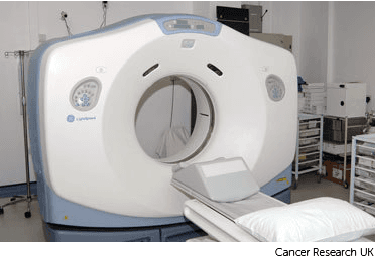
Your tell you what is going to happen and let you know if you need to remove any clothes or jewellery. They then help you into position on the scan couch.
The CT scanner couch is the same type of bed that you lie on for your treatment sessions. You have to lie as still as you can. This helps the radiographers take accurate measurements. This means they can make sure you are lying in the correct position every time you have treatment. They will check that you are comfortable while you are lying on the couch. If you are uncomfortable, do let them know so they can help.
You might need an injection of contrast into a vein in your hand. This is a dye that helps body tissues show up more clearly on the scan.
Before you have the contrast, your radiographer asks you about any medical conditions or allergies. Some people are allergic to the contrast.
Once you are in position your radiographers move the couch up and through the scanner. They then leave the room and the scan starts.
The scan takes about 5 minutes. You won't feel anything. Your radiographers can see and hear you from the CT control area where they operate the scanner.
It is important that your head is still during radiotherapy. This is called immobilisation. You might have one of the following:
mask or mould
head frame
A radiotherapy mask is also called a shell. It keeps your head still each time you have your radiotherapy. So your treatment is as accurate as possible, and healthy tissues are not exposed to radiotherapy.
You can see through most types of masks, as they usually have lots of small holes. The radiographers might make marks on them. They use the marks to accurately line up the radiotherapy machine for each treatment.
Your team might make the mask in the mould room of the radiotherapy department or during your CT planning session. It takes between 10 to 45 minutes depending on the type of mask.
The mask is normally made directly against your skin. It's helpful to wear clothing that you can easily take off from around your neck. You also need to take off any jewellery from that area.
Having long hair or a lot of facial hair can make it difficult to make and fit a head mask. The radiotherapy staff will let you know if you need to do anything beforehand. For example, they may ask you to tie your hair back or trim or shave your beard before treatment starts. Once treatment has started, they usually ask you not to change your hair. This is so the mask continues to fit.
A mould technician or radiographer uses a special kind of plastic that they heat in warm water. This makes it soft and pliable. They put the plastic on to your face so that it moulds exactly. It feels a little like a warm flannel and is a mesh with holes in so you can breathe.
After a few minutes the mesh gets hard. The technician takes the mask off and it is ready to use.
The mask is kept in the radiotherapy department and you wear it for each treatment. Or you might have a mask made for a single treatment.
The video below shows what happens when you have your mesh mask made. The video is about 1 and a half minutes long.
Your radiotherapy team might fit a head frame if you are having . They usually fit the frame on the same day as your radiotherapy treatment.
They attach the head frame to your skull using 4 pins. Before they attach it, you have 4 injections of local anaesthetic at the points where the frame attaches to your head. This takes about 10 minutes. The head frame is then fixed into the radiotherapy machine while you are lying on the treatment couch.
As they fit the frame, you feel some pressure and tightness, but it usually feels better within a few minutes. You then have your radiotherapy treatment on the same day.
Your radiographer will give you more information about the frame and how long it will take to prepare you for treatment. You may be in the hospital for several hours. If the frame becomes uncomfortable, let your radiographers know. They can arrange for you to have pain relief if you need it.
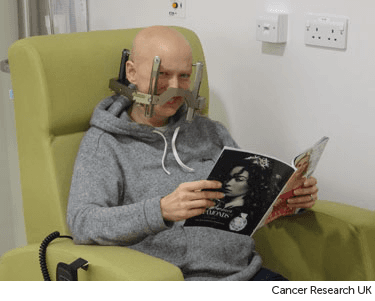
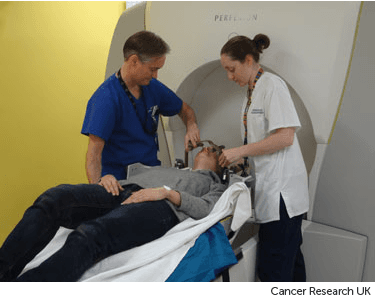
You usually have a head frame fitted for a single treatment or a small number of treatments. If you are going to have a number of treatments, you have the frame fitted and removed each time.
You might have to wait a few days or up to 3 weeks before you start treatment.
During this time the physicists and your radiotherapy doctor (clinical oncologist) decide the final details of your radiotherapy plan. They make sure that the area of the cancer will receive a high dose and nearby areas receive a low dose. This reduces the side effects you might get during and after treatment.
You usually have your radiotherapy as an outpatient. This means you come to the hospital each day for your treatment but you don’t stay overnight.
These daily visits can take up time and can affect your usual routine. It can help to sort out a few things before you start treatment, so you feel as prepared and supported as possible.
These might include:
work
care for children or other loved ones
care for your pets
Find out what happens during the radiotherapy appointments for a brain tumour
Last reviewed: 31 Mar 2026
Next review due: 31 Mar 2029
You have external radiotherapy in a hospital radiotherapy department. You usually have it as an outpatient each weekday over 3 to 6 weeks.
Radiotherapy to the brain and spinal cord can cause side effects. These include tiredness and feeling sick.
It can be difficult to find out that you have a brain tumour. There is practical and emotional support available to help you, your family and your friends cope with a brain or spinal cord tumour.
Primary brain tumours are cancers that start in the brain. Tumours can start in any part of the brain or related structures.

About Cancer generously supported by Dangoor Education since 2010. Learn more about Dangoor Education



Search our clinical trials database for all cancer trials and studies recruiting in the UK.

Connect with other people affected by cancer and share your experiences.

Questions about cancer? Call freephone 0808 800 40 40 from 9 to 5 - Monday to Friday. Alternatively, you can email us.
