Stages, types and grades
The Dukes' staging system is not really used anymore. But you might hear your doctor talking about your bowel cancer as Dukes’ A,B,C or D.
The cancer is in the inner lining of the bowel. Or it is slightly growing into the muscle layer.
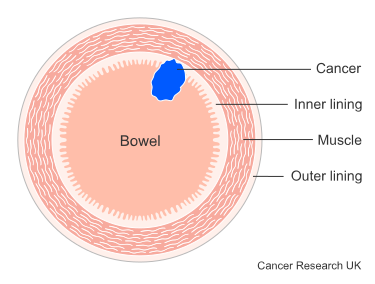
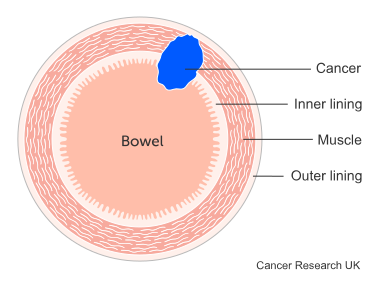
The cancer has grown through the muscle layer of the bowel.
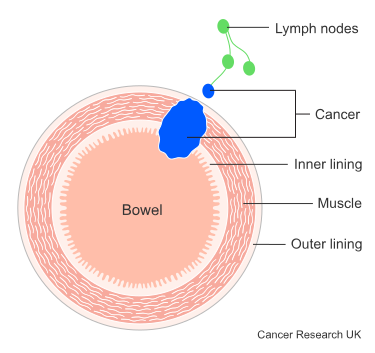
The cancer has spread to at least 1 close to the bowel.
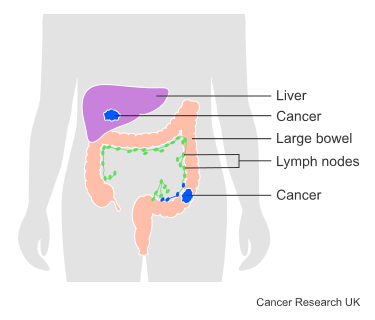
The cancer has spread to another part of the body, such as the liver, lungs or bones.
In the number staging system, this is the same as stage 4. It is also called metastatic or advanced bowel cancer.
The stage of your cancer helps your doctor to decide which treatment you need. Treatment also depends on:
your type of cancer (the type of cells the cancer started in)
where the cancer is in your bowel (colon or rectum)
other health conditions that you have
The stage of the cancer and these other factors can also give an idea of your outlook (prognosis).
The main treatments for cancer of the large bowel (colon cancer) are:
surgery
The main treatments for cancer of the back passage (rectal cancer) are:
surgery
chemotherapy
chemotherapy and radiotherapy together ()
Read more about the treatment for bowel cancer that hasn’t spread
Metastatic cancer means your cancer has spread away from where it started. It is also called advanced cancer.
You might have chemotherapy or radiotherapy for bowel cancer that has spread. Sometimes you can also have surgery. This is to remove as much cancer as possible and help with your symptoms.
You might also have:
• a •
Read about bowel cancer that has spread
Find out about the TNM staging Find out about the number stages
Last reviewed: 07 Nov 2024
Next review due: 07 Nov 2027
The stage of a cancer tells you how far it has grown through the bowel wall and whether it has spread to nearby lymph nodes or other organs. It helps your doctor to know which treatment you need.
Tumour, node and metastasis (TNM) staging is one of the systems used to stage bowel (colon and rectal) cancer.
Treatment depends on whether you have colon or rectal cancer, as well as your cancer stage. You might have surgery, radiotherapy or chemotherapy or a combination of these.
Living with bowel (colorectal) cancer may mean you have changes to your diet, sex life or body image. There is support to help you cope.
You usually start by seeing your GP and they might refer you to a specialist and organise tests. Get information on what happens, and read about screening for bowel cancer.
Bowel cancer means cancer that starts in the colon (large bowel) or back passage (rectum). It is also known as colorectal cancer.

About Cancer generously supported by Dangoor Education since 2010. Learn more about Dangoor Education


Search our clinical trials database for all cancer trials and studies recruiting in the UK.

Connect with other people affected by cancer and share your experiences.

Questions about cancer? Call freephone 0808 800 40 40 from 9 to 5 - Monday to Friday. Alternatively, you can email us.
